Cenote Swimming in the Riviera Maya in 2026: A Practical Guide to the Best Sinkholes Near Playa del Carmen and Tulum
Swimming in a cenote is the single most distinctive experience the Riviera Maya offers that you cannot get at a beach destination anywhere else in the Caribbean. The cenotes are freshwater sinkholes, formed by the collapse of limestone bedrock, that expose the groundwater running beneath the Yucatán Peninsula. There are thousands of them across the peninsula, and several hundred are accessible for swimming, snorkeling, and diving within a short drive of Playa del Carmen and Tulum. In a summer where sargassum continues to affect the ocean beaches, the cenotes are the most reliable swimming option in the region.
This is a practical guide to the best cenotes for swimming in 2026, organized by area, with notes on what to bring, entry fees, and how to avoid the crowds.
The cenotes near Playa del Carmen
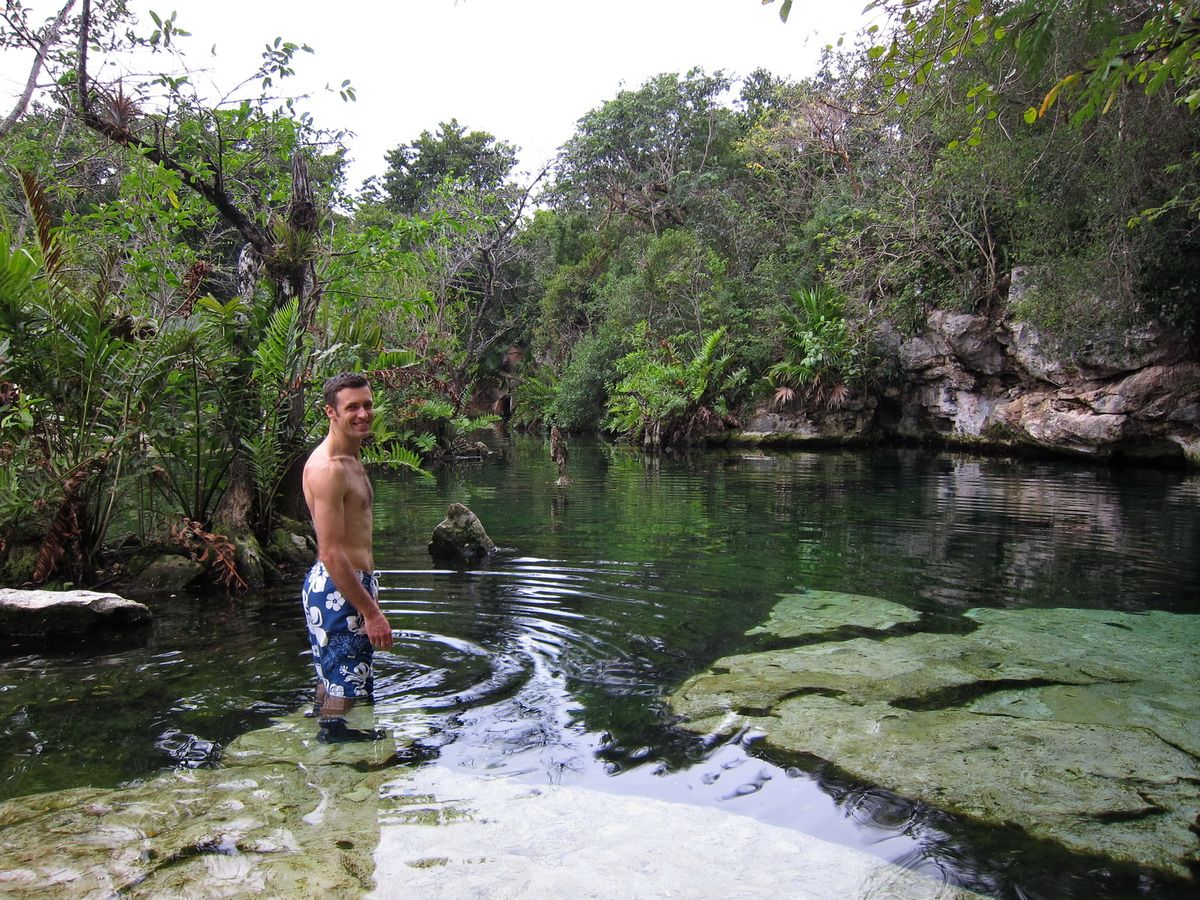
The closest swimmable cenotes to Playa del Carmen sit along the Ruta de los Cenotes, the inland road that runs northwest from the highway toward Puerto Morelos. Cenote Azul, Cenote Cristalino, and Cenote Jardín del Edén are the three most popular on this route, all within a 30 to 40 minute drive from central Playa del Carmen. All three are open-air, shallow, and well-suited for families and casual swimmers, with entry fees in the MXN 150 to MXN 300 range.
Cenote Azul is the largest of the three, with a series of interconnected pools at different depths and a small cliff jump. Cenote Cristalino is the most photographed, with a clear swimming pool and a shallow shelf that is ideal for children. Cenote Jardín del Edén is the quietest, with a deeper main pool and a small cave section that is accessible to confident swimmers. All three have bathrooms, changing rooms, and small snack counters, but no full restaurants.
The cenotes near Tulum
The cenotes near Tulum are a different category. They tend to be deeper, more cave-oriented, and more dramatic than the Playa del Carmen set, and several of them are among the most dived cenotes in the world. Gran Cenote, roughly 15 minutes from Tulum town on the road to Cobá, is the most popular, with a long, shallow cave section that is swimmable for snorkelers and a deeper passage for certified cave divers. Cenote Calavera, closer to town, is a smaller, more atmospheric cenote with a jump platform and a single circular pool. Cenote Dos Ojos, further north on the road toward Playa del Carmen, is the most extensive cave system in the area, with two main caverns and a guided dive route that is one of the signature cavern dives in Mexico.
For swimmers rather than divers, Gran Cenote and Cenote Calavera are the best options. Both are within easy reach of Tulum town, both have entry fees in the MXN 200 to MXN 500 range, and both have basic facilities. Cenote Dos Ojos is worth the trip if you want to snorkel or dive the cavern, but the swimming in the main pool is more limited than at Gran Cenote.
What to bring and what to expect
The practical rules for cenote swimming in 2026 are largely unchanged from previous years. Most cenotes require you to shower before entering the water, to remove sunscreen, insect repellent, and any other chemicals that can damage the ecosystem. Biodegradable sunscreen is required at most sites, and several cenotes prohibit any sunscreen at all, so the best approach is to skip it entirely if you can. Life jackets are mandatory at many of the family-oriented cenotes, and are available for rent at the entrance.
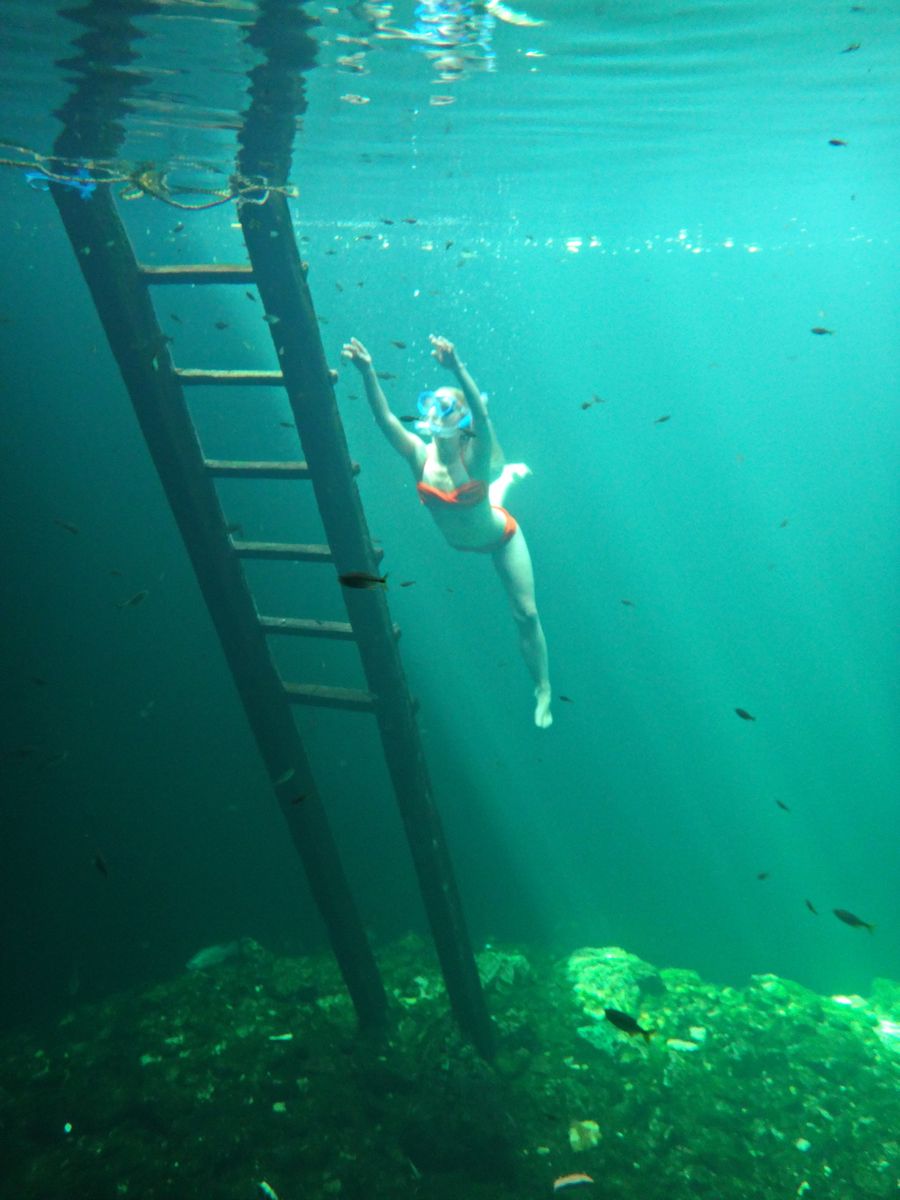
Bring a towel, a mask and snorkel if you have them, a dry bag for electronics, and cash for the entry fee and any food or drink. Most cenotes do not take card payment, although the more developed sites are beginning to accept it. Water shoes are useful at the open-air cenotes, where the rocks around the entry points can be sharp, but they are not necessary at the cenotes with built-in stairs and platforms.
How to avoid the crowds
The cenotes fill up quickly on weekends, particularly in July and August, when Mexican domestic tourism is at its peak. The most reliable way to avoid the crowds is to arrive before 10 AM, when most cenotes are at their quietest, or to book a guided tour that includes timed entry. The second-best option is to go to the cenotes further from the main roads, which tend to see fewer casual visitors.
If you want to build a trip around the cenote ecosystem rather than visiting a single site, the Riviera Maya Cenote Festival, running 22 to 24 August 2026 along the Ruta de los Cenotes inland from Puerto Morelos, is the most organized way to do it. The festival includes guided swims at multiple cenotes, a traditional temazcal ceremony, and a closing concert, and it is one of the few events in the region that puts the cenotes at the center of the experience.
Why cenotes are the Riviera Maya's best 2026 swimming option
With sargassum continuing to affect the ocean beaches in 2026, the cenotes are the most reliable swimming option in the Riviera Maya, and they are also the most distinctive. There is no other beach destination in the Caribbean where you can swim in a freshwater sinkhole in the morning and be on a beach in the afternoon. The combination is the strongest argument for choosing the Riviera Maya over a purely coastal destination in the summer months, and the quality and variety of the cenotes within a short drive of Playa del Carmen and Tulum is the reason the region has become the cenote capital of Mexico.